Fall Garden and Home Prep Shopping List for Essential Tools and Storage Solutions

Fall has a way of exposing every weak spot in a garden setup. The flimsy rake bends in wet leaves. The “temporary” pile of tools by the back door becomes a tripping hazard. Seed packets get tossed into a drawer, then disappear before spring.
A little prep now makes the whole season easier. The right tools help clear beds, gather leaves, harvest late crops, protect supplies, and organize the home before colder weather settles in.
This fall garden and home prep shopping list focuses on practical items that earn their space. No novelty gadgets. No one-season clutter. Just gloves, bins, baskets, pruners, rakes, carts, containers, and storage pieces that help bring order to the busiest part of the garden year.

Start with the tools that handle the mess
Fall cleanup is part garden care and part damage control. Leaves pile up fast. Stems collapse after frost. Annuals need pulling, perennials need trimming, and garden beds need clearing before winter.
The best tools for this stage are the ones you reach for again and again.
Garden gloves protect hands from more than dirt
A good pair of garden gloves is the first thing to buy if the old pair has holes, stiff fingertips, or worn palms. Fall work can be rough on hands. Dead stems snap sharply, wet leaves hide sticks, and cold soil can dry skin quickly.
Look for gloves with:
A flexible fit that still lets fingers move easily
Coated palms for grip when tools or leaves are damp
Reinforced fingertips if you prune roses, berry canes, or woody stems
Breathable fabric so hands do not overheat during heavier cleanup
Keep one lighter pair for weeding and harvesting, and one tougher pair for pruning, hauling, and clearing debris. If gloves get soaked often, having a backup pair saves the day.
My Favorite Gardening Gloves: No More Dirt Under My Fingernails! 🌱
You know those gardening gloves that claim to keep your hands clean, but somehow dirt still manages to sneak in like it pays rent? 😂 These are my favorites because they help keep the dirt where it belongs — in the garden, not under my fingernails! Whether I'm planting garlic, pulling weeds, or digging around in the flower beds, a good pair of gloves makes the job a whole lot more enjoyable. Because I love gardening, but I don't need to bring half the garden into the house with me!
Want to give them a try? Check out my favorite gardening gloves on Amazon.
Disclosure: As an Amazon Associate, I earn from qualifying purchases. This means I may earn a commission if you purchase through my link, at no additional cost to you.
A leaf rake should match the space
A leaf rake sounds simple until the wrong one turns a quick chore into a shoulder workout. Wide plastic rakes cover ground quickly on open lawns. Narrower rakes work better around shrubs, raised beds, fences, and tight corners.
For most homes, a medium-width rake is the most useful choice. It can move dry leaves without being too bulky near paths or borders.
Pay attention to the handle length and weight. A rake that feels fine for two minutes in the store may feel awkward after half an hour outside. A cushioned grip is a nice bonus, especially during big weekend cleanup sessions.
Pruning shears make fall trimming clean and easy
Dull scissors and kitchen shears do not belong in the garden. A sharp pair of pruning shears gives cleaner cuts, which is better for plants and much easier on hands.
Use pruning shears for:
Cutting back spent flowers
Trimming soft perennial stems
Removing dead or damaged growth
Harvesting herbs, peppers, eggplants, and small squash
Snipping twine, garden ties, or thin stems
Bypass pruners are a strong all-purpose choice because the blades pass each other like scissors. They work well on living stems. Anvil pruners can handle tougher dead wood, but they may crush tender stems.
Before storing pruners for winter, wipe the blades clean and dry them well. A light coat of oil can help prevent rust.
Make hauling easier before the heavy work starts
Fall garden chores involve more carrying than expected. Leaves, branches, pumpkins, compost, soil bags, mulch, spent plants, and harvests all have to move from one place to another.
That is where a cart and baskets make a major difference.

A garden cart saves your back
A garden cart is one of the most useful fall purchases because it reduces repeat trips across the yard. It is especially helpful when clearing beds, moving bagged soil, collecting leaves, or transporting tools.
When comparing garden carts, think about the type of work you do most.
A two-wheel cart feels stable when loaded and is usually easy to steer. A wagon-style cart can hold more bulky items. A dump cart helps when unloading mulch, leaves, soil, or compost.
Look for these features:
Large wheels for uneven ground
A sturdy handle that feels comfortable when pulling
A weight capacity that matches real yard chores
A bed that is easy to rinse clean
A size that fits through gates, shed doors, and garden paths
The key is not buying the biggest cart possible. The best cart is the one that fits the property and gets used often.
Harvest baskets keep produce from getting bruised
Late summer and early fall can bring a final rush of produce. Tomatoes, peppers, apples, pears, herbs, winter squash, and root crops all need a place to go.
Harvest baskets make that easier. They keep produce off the ground, reduce trips inside, and help separate delicate crops from heavier ones.
Wire harvest baskets rinse well and work nicely for root vegetables. Wooden or woven baskets look classic and are gentle on tomatoes, herbs, and fruit. Lightweight plastic baskets are practical if children help harvest or if baskets need frequent washing.
A good harvest basket should be easy to carry with one hand and wide enough that produce does not get stacked too deeply. Deep piles can bruise ripe tomatoes, peaches, or tender herbs.
Store seeds, labels, and food before they get lost
Fall is both an ending and a starting point. It is the time to save seeds, label what worked, preserve food, and put away garden supplies so spring starts smoothly.
Small containers matter here. They prevent the familiar spring problem of finding seed packets that are faded, crushed, or mystery-stained.
Seed storage containers keep packets dry and sorted
A seed storage container does not need to be fancy, but it does need to be dry, clean, and easy to organize. Seeds last best when protected from moisture, heat, and light.
Choose a container that can hold packets upright. Photo boxes, small divided cases, and lidded storage boxes all work well. If the container has smaller compartments, sort seeds by planting season or crop type.
Useful categories include:
Cool-season vegetables
Warm-season vegetables
Herbs
Flowers
Saved seeds
Seeds to use first next year
Add a few blank envelopes for saved seeds. Label each one with the plant name and the year collected. If details matter, include color, variety, location in the garden, or any useful notes.
Plant labels help prevent spring confusion
Fall is a smart time to refresh plant labels. Once plants die back, it gets harder to remember which perennial is which, where bulbs went in, or what variety grew best in a raised bed.
Use labels for:
Perennial beds
Garlic rows
Fall-planted bulbs
Seed-starting trays
Saved seed envelopes
Indoor herb pots
Dormant containers stored for winter
Plastic labels are affordable and easy to replace. Metal labels tend to last longer and hold up well in perennial beds. Wooden labels are attractive but may break down faster in wet climates.
For writing, use a garden marker that resists fading. Regular markers often vanish after sun, rain, and time.
Food storage containers turn the harvest into meals
If fall harvests end up in random bowls, bags, and jars, food can spoil before anyone uses it. Good food storage containers help turn garden abundance into actual meals.
Use clear containers when possible. Seeing roasted squash, chopped peppers, washed greens, or cooked beans makes it easier to use them during the week.
Choose containers that stack well in the refrigerator or freezer. Wide, shallow containers are helpful for cooling cooked food. Smaller containers are ideal for herbs, sauces, snack portions, and leftovers.
For freezer storage, leave room at the top if the food expands. Label containers with the contents and date. Even familiar soups and sauces become hard to identify once frozen.

Use bins and organizers to tame seasonal clutter
Fall garden prep does not stop outside. This is also the season when patios, sheds, garages, mudrooms, and basements start filling with supplies.
Storage matters because scattered gear costs time. A missing trowel or tangled bundle of row cover is more than annoying when the first hard frost is in the forecast.
Storage bins work best when they have a job
Storage bins are useful only when they are assigned clear roles. One giant bin full of random items quickly becomes a garden junk drawer.
Use separate bins for different categories:
Seed starting supplies
Frost cloths and row covers
Irrigation parts
Plant ties and twine
Small hand tools
Harvest and preservation supplies
Outdoor cushions or patio textiles
Kids’ garden tools and gloves
Clear bins make contents easy to see. Opaque bins look neater on open shelves. Heavy-duty latches help if bins are stored in a garage, shed, or basement where dust, pests, or moisture may be a concern.
For fall and winter storage, place the heaviest bins on lower shelves. Stack only containers that are designed to hold weight. Label the front and top if bins get moved often.
Outdoor storage protects bulky items
Not everything belongs in the garage or basement. A weather-resistant outdoor storage box, deck box, or small shed can hold bulky seasonal items close to where they are used.
Outdoor storage is helpful for:
Rakes and long-handled tools
Bags of potting mix
Empty pots
Watering cans
Garden kneelers
Harvest baskets
Small cushions
Frost protection supplies
Placement matters. Keep outdoor storage on a level surface where water does not pool. If wind is an issue, choose something sturdy and close to a sheltered wall or fence.
Before storing anything outdoors for the season, let it dry. Wet gloves, damp baskets, and muddy tools can create odor, mildew, or rust when trapped inside a closed box.
A garden tool organizer keeps sharp tools in sight
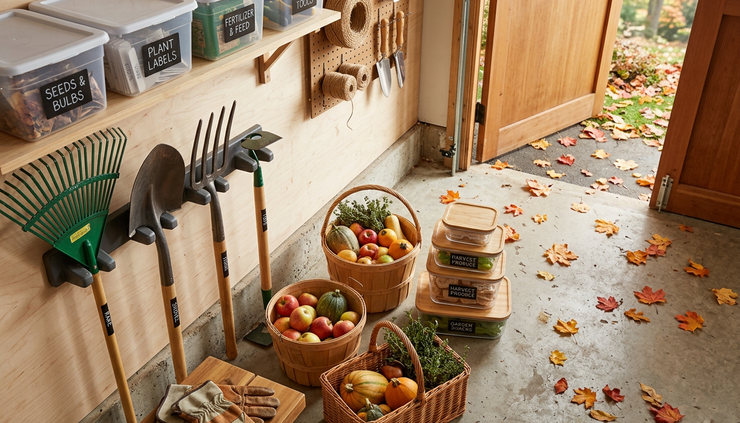
A garden tool organizer solves one of the most common fall problems: tools leaning in corners, falling over, or disappearing under seasonal clutter.
Wall-mounted racks are great for garages and sheds. Freestanding organizers work well if wall space is limited or if the setup needs to move. Pegboards can hold small hand tools, gloves, twine, labels, and pruners in plain view.
A good organizer should have spots for:
Long-handled tools like rakes and hoes
Hand tools like trowels and cultivators
Pruning shears
Gloves
Twine, clips, and ties
Small containers or baskets
Store cutting tools where children and pets cannot reach them. Keep blades closed, covered, or pointed safely away from walkways.
Build a simple fall prep station
The easiest way to use these products is to create a fall prep station. It does not need to be fancy. A shelf in the garage, a corner of the shed, or a potting bench can work.
Give each item a home:
Item | Best place to keep it | Why it helps |
Garden gloves | Hook, basket, or small bin near the door | Easy to grab before quick chores |
Leaf rake | Wall rack or outdoor storage | Keeps long tools from falling over |
Garden cart | Shed, garage, or covered side yard | Ready for cleanup and hauling |
Storage bins | Labeled shelf space | Groups seasonal supplies |
Seed storage containers | Cool, dry indoor spot | Protects seeds from moisture |
Plant labels | Seed bin or potting bench drawer | Ready for fall planting and spring starts |
Pruning shears | Tool organizer or covered hook | Keeps blades safe and clean |
Garden tool organizer | Shed, garage, or utility wall | Keeps tools visible |
Outdoor storage | Deck, patio, or side yard | Holds bulky weather-safe gear |
Harvest baskets | Pantry, mudroom, or potting bench | Ready for late crops |
Food storage containers | Kitchen cabinet or pantry shelf | Makes harvest storage easier |
This setup saves time because it removes decision fatigue. When every category has a home, cleanup becomes a routine instead of a search mission.
Buy with storage, durability, and cleanup in mind
Fall shopping can get scattered because every chore feels urgent. One trip is for leaf bags. Another is for gloves. Then bins, baskets, labels, and containers get added later.
A better approach is to buy around actual tasks.
For outdoor cleanup, prioritize:
Garden gloves
Leaf rake
Garden cart
Pruning shears
Garden tool organizer
For harvest and food prep, prioritize:
Harvest baskets
Food storage containers
Plant labels
Seed storage containers
For home and seasonal storage, prioritize:
Storage bins
Outdoor storage
Tool organizers
Weather-safe containers
Quality matters most for the items that take the most abuse. Spend more attention on the rake, pruners, gloves, cart, and outdoor storage. For simple categories like plant labels or basic bins, practicality matters more than extras.
Before buying, measure the spaces where items will live. Check shelf depth, shed door width, garage wall space, and the size of the path where a cart needs to roll. A storage bin that will not fit the shelf is just another problem to store.
Also think about cleaning. Smooth plastic bins, washable baskets, rinseable carts, and rust-resistant tools are easier to maintain after muddy fall tasks.
The takeaway for a calmer fall season
Fall prep is easier when the shopping list matches the work ahead. Start with hand protection, leaf cleanup, pruning, hauling, and harvest storage. Then add the bins, labels, seed containers, and organizers that keep everything from spilling into winter chaos.
The best setup is simple: tools where they are easy to reach, seeds where they stay dry, food where it gets used, and seasonal supplies where they can be found again.
With the right essentials in place, fall cleanup feels less like a scramble and more like closing the garden well for the year.


Comments